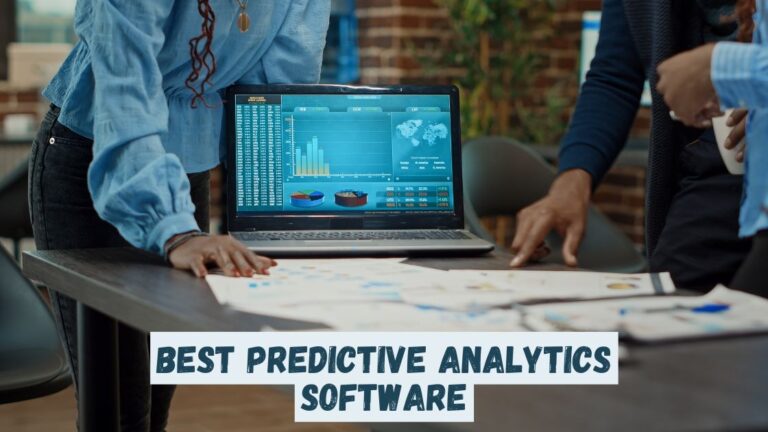
In today’s fast-paced corporate landscape, data analytics for business decision making has become the secret weapon behind every thriving organization. Gone are the days when executives relied solely on gut instincts or outdated reports to steer their companies forward. Now, industry leaders across the globe are turning to data-driven decisions to unlock new revenue streams, reduce operational costs, and stay ahead of fierce competition.
Whether you are a startup founder or a seasoned executive, understanding how to transform raw numbers into actionable insights can redefine the way you lead. This article pulls back the curtain on how top companies are using business intelligence and predictive analytics to fuel sustainable growth and how you can do the same.
The truth is, organizations that embrace data analytics for business decision making consistently outperform those that don’t. From identifying emerging market trends to optimizing supply chains, the applications are vast and game-changing. Industry giants like Amazon, Netflix, and Google have built empires on the foundation of strategic data interpretation, proving that a strong analytical culture creates a lasting competitive advantage.
But this isn’t just a story about tech titans small and mid-sized businesses are also leveraging these same principles to achieve remarkable business growth strategies. Throughout this guide, you will discover real-world examples, expert perspectives, and proven frameworks that show exactly how data analytics for business decision making drives measurable results. By the end, you will have a clear roadmap to make smarter, faster, and more confident decisions for your organization’s future.

What Is Data Analytics and Why Does It Matter?
Data analytics for business decision making refers to the systematic process of collecting, organizing, and interpreting large volumes of information to guide strategic choices. At its core, it transforms raw data into meaningful patterns that leaders can act upon with confidence. Rather than depending on assumptions, companies now use analytical tools and methodologies to understand customer behavior, forecast demand, and measure performance across every department.
The significance of this approach cannot be overstated. According to recent studies, organizations that adopt data driven strategies are significantly more likely to acquire new customers and retain existing ones. In an era where every click, transaction, and interaction generates valuable information, businesses that fail to harness this resource risk falling behind. Data analytics for business decision making bridges the gap between uncertainty and clarity, empowering leaders to act with precision rather than guesswork.
A Brief History of Data Analytics in Business
The concept of using information to guide decisions is not new. Businesses have relied on basic statistical analysis and financial reporting for decades. However, the digital revolution of the early 2000s changed everything. With the rise of cloud computing, machine learning, and big data technologies, companies suddenly had access to unprecedented volumes of information.
Over the past decade, data analytics for business decision making has evolved from a luxury reserved for large corporations to an essential practice for organizations of all sizes. Today, affordable tools like Google Analytics, Tableau, and Power BI have democratized access, allowing even small businesses to compete on an analytical level. This evolution has fundamentally reshaped how industries operate, making real time insights a standard expectation rather than an exception.
How Data Analytics for Business Decision Making Works
Understanding the process behind analytical decision making helps demystify its value. The workflow typically follows a structured path that ensures accuracy and relevance at every stage.
The Core Process
Data analytics for business decision making begins with data collection from multiple sources such as CRM systems, social media platforms, sales records, and website interactions. Once gathered, this information undergoes cleaning and preparation to remove inconsistencies. Analysts then apply statistical models, visualization techniques, and predictive algorithms to extract patterns. Finally, these insights are presented to decision makers through dashboards and reports that simplify complex findings into clear recommendations.
Types of Analytics Used in Business
Not all analytics serve the same purpose. Businesses typically rely on four key types to address different strategic needs.
- Descriptive Analytics examines historical data to understand what happened in the past and identify performance trends
- Diagnostic Analytics digs deeper to uncover why certain outcomes occurred by analyzing root causes
- Predictive Analytics uses machine learning and statistical models to forecast future outcomes and market trends
- Prescriptive Analytics recommends specific actions based on predicted scenarios to optimize results
- Real Time Analytics monitors live data streams to enable immediate responses to changing conditions
Each type plays a distinct role, and successful organizations often combine all five to build a comprehensive analytical framework that supports every level of decision making.
Key Benefits of Using Data Analytics for Business Decision Making
The advantages of integrating analytics into your business strategy extend far beyond simple number crunching. When implemented effectively, data analytics for business decision making delivers transformational results across the entire organization.
Improved Accuracy and Reduced Risk
One of the greatest strengths of analytical decision making is its ability to minimize risk. By grounding every choice in verified data rather than intuition, leaders can avoid costly mistakes. Predictive models help anticipate market shifts, supply chain disruptions, and customer churn before they happen, giving businesses time to prepare and adapt.
Enhanced Customer Understanding
Data analytics for business decision making provides deep insights into customer preferences, purchasing habits, and satisfaction levels. This customer intelligence allows companies to personalize marketing campaigns, improve product offerings, and build stronger relationships that drive long term loyalty and retention.
Operational Efficiency and Cost Savings
Organizations using business intelligence tools frequently discover inefficiencies hidden within their processes. From optimizing inventory management to streamlining workforce allocation, data driven insights help cut unnecessary expenses while boosting overall productivity.
Challenges and Drawbacks to Consider
Despite its many advantages, implementing data analytics for business decision making comes with its own set of hurdles that organizations must address thoughtfully.
Data Quality and Integration Issues
Poor data quality remains one of the biggest obstacles. Incomplete records, duplicate entries, and inconsistent formats can lead to unreliable insights. Additionally, integrating data from multiple platforms and legacy systems often requires significant technical effort and investment.
Talent Gap and Organizational Resistance
Finding skilled data analysts and data scientists continues to be a challenge for many businesses. Beyond hiring, there is often cultural resistance within organizations where teams are accustomed to traditional decision making methods. Overcoming this requires strong leadership commitment and ongoing training programs that foster a data driven culture.
Real World Use Cases and Examples
Retail and E Commerce
Major retailers use data analytics for business decision making to optimize pricing strategies, manage inventory levels, and deliver personalized shopping experiences. Amazon’s recommendation engine, powered by advanced analytical models, accounts for a significant portion of its total revenue.
Healthcare
Hospitals and healthcare providers leverage predictive analytics to improve patient outcomes, reduce readmission rates, and allocate resources more efficiently. Data driven insights are helping medical professionals make faster and more accurate diagnoses.
Finance and Banking
Financial institutions rely on data analytics for business decision making to detect fraudulent transactions, assess credit risk, and develop personalized financial products. Real time monitoring systems process millions of transactions daily to identify suspicious activity within seconds.
Expert Tips for Getting Started
If your organization is ready to embrace analytical decision making, these practical recommendations will help you build a strong foundation.
- Start with clear objectives by defining what specific business questions you want your data to answer
- Invest in the right tools such as Tableau, Power BI, or Google Data Studio that match your team’s skill level
- Prioritize data quality by establishing governance policies that ensure accuracy and consistency from the start
- Build a data driven culture by training employees at every level to understand and value analytical insights
- Measure and iterate by continuously tracking your analytics ROI and refining your approach based on results
By following these steps, businesses of any size can begin harnessing the power of data analytics for business decision making to drive smarter strategies and sustainable growth.

Conclusion
The evidence is clear data analytics for business decision making is no longer optional but a fundamental requirement for any organization that wants to thrive in today’s competitive marketplace. Throughout this article, we have explored how industry leaders are leveraging analytical insights to drive revenue growth, reduce operational costs, and build stronger customer relationships. From understanding the core process and types of analytics to recognizing real world applications across retail, healthcare, and finance, the transformative power of a data driven approach is undeniable.
We also examined the challenges that come with implementation, including data quality concerns, integration hurdles, and the ongoing talent gap. However, these obstacles are far outweighed by the benefits when organizations commit to building a strong analytical foundation. The companies that invest in business intelligence tools, predictive modeling, and a culture that values evidence based strategies will consistently outperform those that rely on outdated methods.
Whether you are leading a multinational corporation or growing a small business, data analytics for business decision making offers a clear pathway to smarter strategies and measurable results. The key is to start with well defined goals, choose the right tools, and foster a mindset that embraces continuous learning and improvement.
Now is the time to act. The organizations that harness the power of data analytics for business decision making today will be the ones shaping their industries tomorrow. Begin your analytical journey now, and let data driven insights guide every decision you make moving forward.