
Digital marketing software for small business is any platform that helps lean teams plan, execute, measure, and optimize their online marketing without hiring a full department. From email automation and social media scheduling to SEO tracking and customer relationship management, the right tool stack can deliver enterprise-level results on a bootstrapped budget.
If managing marketing feels overwhelming alongside everything else you handle, you are not alone. A 2026 LocaliQ Small Business Marketing Trends Report found that 52% of small businesses operate with monthly marketing budgets under $1,000, and half have nobody specifically dedicated to marketing. Owners and skeleton crews are writing posts, running ads, and tracking analytics all by themselves.
The right marketing platform transforms that daily scramble into a structured, repeatable system. This guide breaks down exactly what to look for, which categories of tools exist, how AI is changing the landscape, and which platforms deliver the strongest return for businesses with limited resources.
Table of Contents

Top Picks at a Glance
| Platform | Best For | Free Plan | Paid Starting Price | Standout Feature |
| HubSpot Marketing Hub | All-in-one beginners | Yes | $15/month | Free CRM with email, forms, and landing pages |
| Mailchimp | Email marketing on a budget | Yes (500 contacts) | $13/month | Drag-and-drop email builder with AI suggestions |
| Semrush | SEO and content marketing | Limited trial | $139/month | Competitor analysis and keyword tracking |
| Brevo (Sendinblue) | Multi-channel automation | Yes (300 emails/day) | $9/month | Email, SMS, and WhatsApp from one dashboard |
| Buffer | Social media scheduling | Yes (3 channels) | $6/month/channel | Clean interface with AI content assistant |
| Zoho CRM | Affordable customer management | Yes (3 users) | $14/user/month | Deep integration with 45+ Zoho business apps |
What Are Small Business Marketing Tools and Why Do They Matter?
Small business marketing tools are applications designed to automate, manage, and measure online marketing activities. They cover everything from email campaigns and search engine optimization to paid ads and social media management.
Manual marketing simply does not scale. When you are juggling customer service, product development, operations, and finances on top of promotion, automation becomes a necessity rather than a luxury. Research from DemandSage shows that roughly 58% of small businesses already rely on digital channels to reach their customers, and that number continues to climb.
Here is why investing in the right platform matters:
Time savings through automation. Repetitive tasks like follow-up emails, social publishing, and performance reporting can run without manual intervention. A retail shop, for instance, can trigger cart abandonment emails automatically, recovering lost revenue while the owner focuses on inventory.
Smarter targeting and personalization. Marketing platforms segment audiences by purchase history, location, and engagement patterns, making each message feel personal rather than generic.
Decisions backed by data. Instead of guessing what works, software dashboards show exactly where your spending generates returns and where it leaks.
A level playing field. Affordable tiers now give startups access to the same automation, analytics, and personalization that Fortune 500 companies have used for years.
How Large Is the Online Marketing Opportunity for Small Businesses in 2026?
The opportunity is massive and still accelerating. According to Hostinger’s analysis of industry data, the global market value of digital marketing is predicted to reach $472.5 billion in 2025 and will grow at a compound annual rate of 13.6% through 2033.
Small businesses are actively claiming a larger share of this growth. A Clutch survey cited by SeoProfy found that 60% of small businesses plan to raise their marketing budgets in 2026, prioritizing content marketing (45%), digital advertising (43%), and branding (41%).
The return on investment can be substantial. DemandSage’s compiled benchmarks indicate that businesses typically earn $5 for every $1 they spend on digital promotion. Email alone delivers an even steeper return, with average ROI figures reaching $36 to $42 per dollar invested.
These numbers tell a clear story: businesses that adopt smart marketing technology position themselves for outsized returns, while those relying solely on word of mouth risk falling behind competitors running automated systems around the clock.
Key Categories of Marketing Platforms for Smaller Companies
Not every tool serves the same purpose. Understanding the main categories prevents you from paying for features you will never touch.
Email Marketing Platforms
Email remains the highest returning channel available to budget-conscious businesses. Platforms like Mailchimp, Brevo, Klaviyo, and ActiveCampaign let you build subscriber lists, design polished emails, automate drip sequences, and track performance.
CEO GPS reports that email yields between $36 and $44 in ROI per dollar spent, making it the ideal retention channel. The best tools also include audience segmentation, A/B split testing, and CRM integration for personalization at scale.
Social Media Management Tools
Managing multiple accounts manually eats hours every week. Platforms like Buffer, Hootsuite, and Sprout Social let you schedule posts, monitor brand mentions, reply to comments from one dashboard, and identify which content type generates the most engagement.
For businesses that rely on organic social reach to attract local customers, these tools maintain consistent visibility without requiring you to be glued to your phone all day.
SEO and Content Marketing Platforms
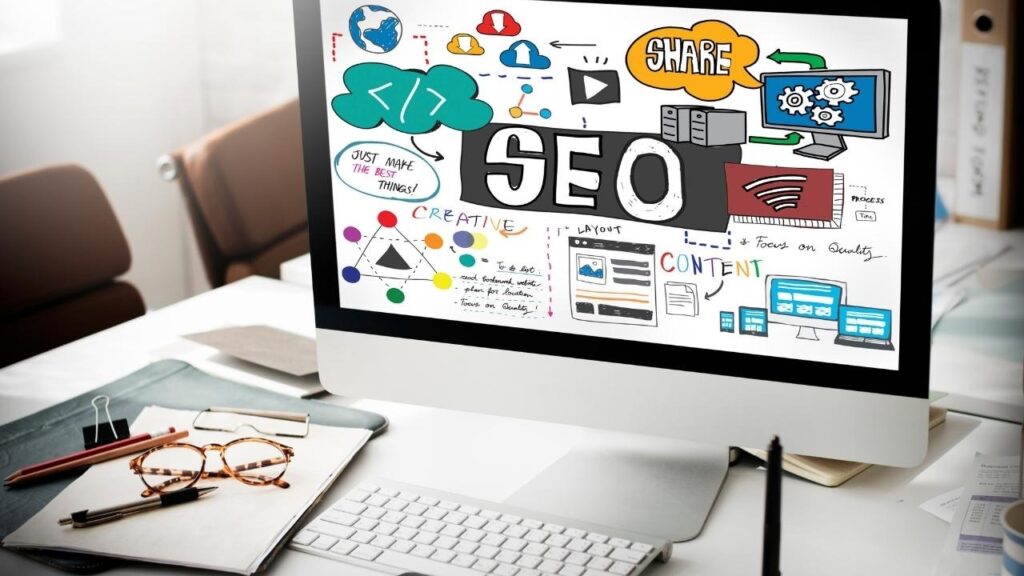
Search engine optimization drives sustainable traffic that does not require ongoing ad spend. Tools like Semrush, Ahrefs, and Moz help you research keywords, audit technical issues, track rankings, and analyze competitor strategies.
SeoProfy’s data suggests that SEO delivers an average return of 8x, compared to roughly 4x for pay-per-click under similar conditions. For lean teams watching every dollar, that higher return makes SEO tools a smart long-term play.
Customer Relationship Management (CRM) Software
A CRM stores every customer interaction, purchase, and communication in one place, forming the backbone of your sales and marketing operations. DemandSage notes that 62% of marketers use CRM software as part of their core infrastructure. HubSpot, Zoho CRM, and Salesforce Starter Suite each offer free or affordable tiers built specifically for smaller teams.
All-in-One Marketing Suites
If managing separate subscriptions sounds exhausting, bundled platforms combine email, CRM, landing pages, analytics, and sometimes social media under a single roof. HubSpot Marketing Hub and Salesforce Marketing Cloud are the most recognized names here. The tradeoff is that all-in-one solutions rarely go as deep in any single area as a dedicated specialist tool, but the convenience is hard to beat when your team is tiny.
How to Choose the Right Platform for Your Business
The best marketing platform depends on your goals, budget, and team capacity. Start with three honest questions: Which channel drives the most revenue right now? How many hours do I lose to repetitive tasks each week? What is the maximum I can invest monthly without straining cash flow?
Then follow this framework:
Step 1: Identify your primary channel. If email generates most of your sales, prioritize an email platform with robust automation. If organic search is your main lead source, invest in SEO software first.
Step 2: Start with one tool, not five. Many owners subscribe to too many platforms at once and master none of them. Address your biggest bottleneck first, then expand.
Step 3: Use free tiers and trials. HubSpot, Mailchimp, Brevo, and Zoho CRM all provide functional free versions. Test before you commit.
Step 4: Verify integration compatibility. Whatever you choose should connect with the software you already use, whether that is Shopify, WordPress, QuickBooks, or Google Workspace. Disconnected tools create data silos that waste time and produce unreliable reporting.
AI Powered Marketing Features Worth Watching in 2026
Artificial intelligence is no longer reserved for corporations with massive tech budgets. Small businesses are adopting AI marketing tools at a pace that surprises even industry analysts.
The U.S. Chamber of Commerce’s 2026 Small Business AI Index found that AI adoption among businesses with fewer than 500 employees has reached 51%, with marketing automation tools specifically adopted by 43% of respondents, a 13-point jump from the previous year.
Here are the AI features making the biggest difference right now:
Predictive send-time optimization. Email platforms like Mailchimp and ActiveCampaign analyze subscriber behavior to automatically deliver messages when each individual is most likely to open them, lifting open rates without manual effort.
AI content generation. Generative AI tools help small teams draft blog posts, social captions, ad copy, and email subject lines in minutes. Daily AI Mail reports that companies using AI for content creation publish 42% more material each month, and 68% report higher content marketing ROI.
Automated audience segmentation. AI groups contacts dynamically by analyzing purchase history, browsing behavior, and engagement patterns, removing the manual sorting that drains hours each week.
Chatbots for lead capture. AI chatbots answer visitor questions, qualify leads, and book appointments around the clock, even when your team is offline.
Loopex Digital’s 2026 report found that marketing teams using AI are 44% more productive and save roughly 11 hours per week on routine tasks. For a business owner wearing multiple hats, those reclaimed hours translate directly into growth.
Common Mistakes to Avoid When Selecting Marketing Software
Even the best digital marketing software for small business will underdeliver if you fall into these traps:
Overpaying for unused features. Enterprise plans often bundle advanced attribution, custom API access, and multi-team permissions that a five-person company will never touch. Match the plan to your actual usage today, not aspirational goals.
Ignoring the learning curve. A powerful platform that nobody on your team can operate is a wasted subscription. Prioritize tools with strong onboarding, active communities, and responsive support.
Skipping migration planning. Switching platforms without a clear data migration plan leads to lost contacts and broken automations. Map out how your lists, templates, and campaign data will transfer before you cancel anything.
Overlooking mobile accessibility. Hostinger projects that mobile advertising will account for 70% of total ad spending by 2028. Your marketing tools need to work well on mobile devices so you can manage campaigns from anywhere.
Topical Range: Where Marketing Platforms Fit in the Bigger Picture
Digital marketing software for small business connects to broader strategic topics every owner should understand: customer acquisition cost, conversion rate optimization, sales funnel mapping, brand positioning, and customer lifetime value analysis.
A well-chosen tool stack feeds reliable data into each of these areas. You learn not only how many leads came in, but what each lead actually cost, which channels produced the highest-quality buyers, and where prospects abandon the journey before purchasing. The businesses that tie their marketing platforms to these deeper questions are the ones that scale sustainably instead of burning budget with no clear return.
Conclusion
Selecting the right marketing platform comes down to three things: understanding your goals, matching tools to your most important channel, and starting lean before scaling up. The financial case for action is strong. SQ Magazine’s analysis of industry data shows that businesses generate roughly $5.44 for every $1 invested in marketing automation.
Whether you start with Mailchimp for email, HubSpot for an all-in-one solution, or Semrush for search visibility, the critical move is to stop researching and start testing. Free trials exist precisely for this reason. Try two or three platforms, evaluate results after 30 days, and commit to whichever one moves the needle for your specific situation.
If this guide helped you narrow down your choices, share it with another business owner who could use the same clarity. And if you have a marketing tool that works exceptionally well for your company, leave a comment below. Your recommendation might be exactly what someone else needs.
What is the best affordable marketing platform for beginners?
HubSpot Marketing Hub is widely regarded as the strongest starting point because it bundles a free CRM with email marketing, forms, and landing pages in a single platform. HubSpot Academy also provides free training that helps newcomers learn marketing fundamentals while they use the software.
How much do small business marketing tools typically cost?
Pricing varies significantly by tool type and plan level. Platforms like Mailchimp, Brevo, and Zoho CRM offer functional free tiers, while paid plans generally range from $9 to $300 per month depending on contact list size, feature depth, and the number of users.
Can small businesses realistically use AI in their marketing?
Absolutely, and a large percentage already do. AI capabilities like smart email scheduling, content drafting, chatbot support, and predictive analytics are now embedded in affordable platforms. These features help lean teams produce more content, respond faster, and optimize campaigns without additional headcount.
Should I use one all-in-one platform or multiple specialized tools?
If simplicity and speed matter most, an all-in-one platform like HubSpot or Salesforce Starter Suite keeps everything under one roof. However, if a single channel drives most of your revenue, a specialized tool dedicated to that channel usually offers deeper functionality and delivers stronger results.
How can I tell if my marketing platform is worth the investment?
Focus on three metrics: total leads generated, cost per lead, and the conversion rate from lead to paying customer. Most marketing platforms report these figures automatically through built-in dashboards. If your cost per lead is declining and your conversion rate is holding steady or improving, the tool is earning its subscription price.
Is free marketing software sufficient for growing a small business?
Free plans are excellent for testing a platform or getting started without financial risk. As your contact list expands and your automation requirements grow more complex, upgrading to a paid tier typically becomes necessary to access advanced segmentation, split testing, detailed analytics, and priority customer support.