
The top generative AI startups in 2026 are reshaping every layer of the technology stack, from foundation models and AI infrastructure to vertical applications in law, healthcare, content, and coding. If you want the short answer before reading further: OpenAI, Anthropic, xAI, Mistral, Perplexity, Cohere, and Databricks lead the foundation model tier, while companies like Harvey, Glean, ElevenLabs, Suno, Runway, Cursor, and Jasper dominate vertical applications.
Table of Contents
This guide gives you a complete breakdown: the companies that matter right now, real funding and valuation data from the most recent rounds, which investors are backing which thesis, and how each startup fits into the broader generative AI market map. No zombie lists from 2022, no outdated names, just the 2026 picture with sources you can verify.

What Counts as a Generative AI Startup in 2026?
Quick answer: A generative AI startup is a privately held, venture backed company whose core product uses large language models, diffusion models, or other generative techniques to produce new content, code, images, audio, or video rather than simply retrieving or classifying existing information.
The category has become a little blurry as every software company adds AI features, so here is the operating definition most analysts now use:
- Private company (not acquired, not fully public)
- VC or strategic backing from credible investors
- Generative core rather than bolted on AI features
- Founded within the past 8 to 10 years in most cases
Under that definition, the top companies fall into two distinct tiers. Foundation model labs compete on raw model capability, and vertical or application startups compete on workflow, brand, and domain depth. Both tiers are seeing record funding in 2026.
The 2026 Funding Landscape at a Glance
Quick answer: According to Crunchbase data reported in early 2026, funding to foundational generative AI companies in Q1 2026 alone was double the total for all of 2025, with roughly half of global venture capital in 2025 flowing to AI related companies.
A few headline data points worth anchoring on before the full list:
- Crunchbase News reports that nearly 50% of all global venture funding in 2025 went to companies in AI related fields.
- According to CNBC’s reporting on the Anthropic Series G, Anthropic closed a $30 billion Series G in February 2026 at a $380 billion post money valuation, the second largest private financing round in tech history.
- OpenAI’s 2025 round of over $40 billion remains the largest private financing in history.
- Second Talent’s aggregation of CB Insights data shows generative AI alone accounts for roughly 26% of all AI funding globally.
That concentration of capital is why the 2026 list looks fundamentally different from the 2023 or 2024 lists. A handful of foundation labs are absorbing extreme capital, while vertical apps are winning on distribution and workflow depth.
Tier 1: Foundation Model Labs
Quick answer: The foundation model tier in 2026 is led by OpenAI, Anthropic, xAI, Mistral, Cohere, Databricks, and a small cohort of next generation labs including Thinking Machines and World Labs.
These companies build the underlying models that everyone else relies on. Funding and valuations are unlike anything in prior tech history.
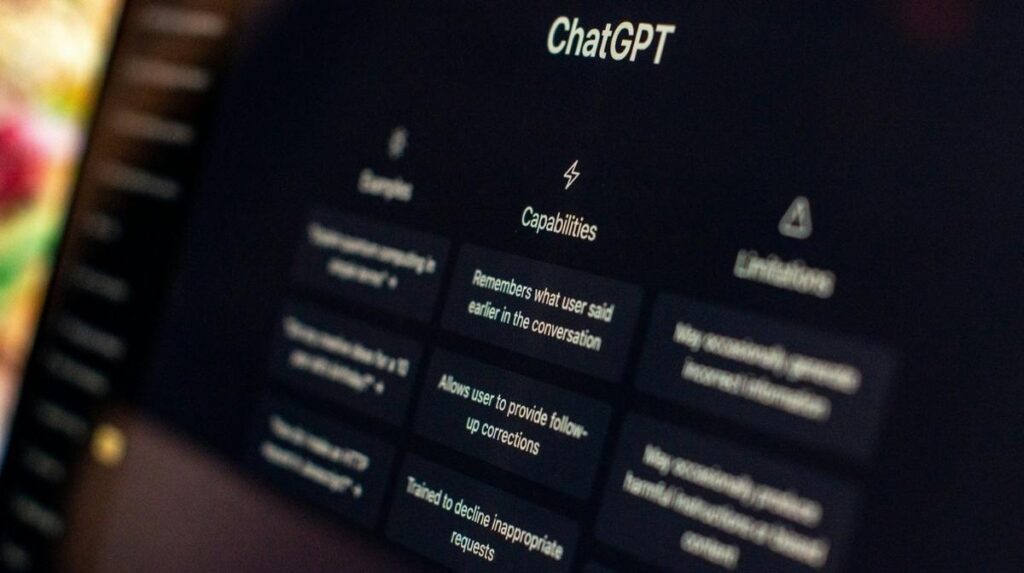
1. OpenAI
- Product: GPT models, ChatGPT, Codex, Sora, API platform
- Total funding: Over $60 billion cumulative, with a 2025 round exceeding $40 billion
- Valuation signals: Recent reporting tracks OpenAI at roughly $500 billion post money after late 2025 rounds, with preparation for a potential public listing later in 2026
- Key investors: Microsoft, SoftBank, Thrive Capital
2. Anthropic
- Product: Claude models, Claude Code, Claude API
- Total funding: Roughly $64 billion cumulative, per TechCrunch’s February 2026 coverage
- Valuation: $380 billion post money, February 2026
- Key investors: GIC, Coatue, Amazon, Google, Nvidia, Microsoft
- Revenue signal: Anthropic’s own Series G announcement reported $14 billion run rate revenue as of the round close
3. xAI
- Product: Grok models, integrated with X
- Total funding: Over $42 billion reported in debt and equity through early 2026
- Valuation signal: Merged commercial interests with SpaceX ahead of a planned 2026 IPO
- Key investors: Extensive mix of venture and strategic backers
4. Mistral AI
- Product: Open weight models and an enterprise platform
- Strengths: European compliance positioning, open weight strategy
- Key investors: Include major European and US funds backing the Series A and beyond
5. Cohere
- Product: Enterprise focused language models and RAG tooling
- Total funding: Recent rounds put the company in the multi billion dollar valuation range, with a $500 million round reported in 2025 at roughly $6.8 billion
6. Thinking Machines Lab and World Labs
- Thinking Machines Lab reached reported valuation talks of $50 to $60 billion in late 2025, per Bloomberg coverage cited by Wellows’ AI startup tracker
- World Labs, co founded by Fei Fei Li, raised $1 billion for 3D world foundation models, backed by AMD, Autodesk, Nvidia, and Fidelity
Tier 2: Vertical Application Leaders
Quick answer: The strongest vertical generative AI startups in 2026 include Perplexity (AI search), ElevenLabs (voice AI), Suno (AI music), Runway (AI video), Harvey (legal AI), Glean (enterprise search), Cursor (AI coding), and Jasper (AI marketing).
7. Perplexity
- Product: AI answer engine competing with Google
- Funding and valuation: New Market Pitch’s February 2026 analysis reports about $1.2 billion raised, at roughly a $20.5 billion valuation, a capital efficiency ratio near 17x
8. ElevenLabs
- Product: AI voice generation and speech
- Funding and valuation: Per New Market Pitch, roughly $781 million raised at an $11 billion valuation (14.1x efficiency)
9. Suno
- Product: Generative music and audio
- Funding: According to Crescendo’s AI deal tracker, Suno raised a $250 million Series C at a $2.45 billion valuation, reaching roughly $200 million in annual revenue with 100 million registered users
10. Runway
- Product: AI video generation for film and content creators
- Funding and valuation: Approximately $860 million raised at a $5.3 billion valuation, per New Market Pitch
11. Harvey
- Product: AI copilot for large law firms and legal teams
- Funding signal: According to New Market Pitch’s AI valuation ranking, Harvey and Legora together raised a combined $1.2 billion and command a combined midpoint valuation above $11 billion in the legal AI category
- Key customers: Global law firms including Allen & Overy and PwC
12. Glean
- Product: AI powered enterprise search across a company’s internal apps
- Valuation signal: $316 million Series E at roughly $5.3 billion valuation, per Topstartups.io’s AI startup directory
- Key investors: Bessemer, Andreessen Horowitz
13. Cursor (Anysphere)
- Product: AI native code editor
- Strengths: One of the fastest growing developer tools in 2026, with adoption across large engineering teams and strong community momentum
14. Jasper AI
- Product: AI marketing platform for enterprise content teams
- Funding and valuation: $131 million raised, peak $1.5 billion valuation, per Jasper’s Crunchbase profile
- Traction: Over 900 enterprise customers and roughly 20% of the Fortune 500
15. LangChain
- Product: Open source framework and cloud platform for building LLM apps
- Funding and valuation: Approximately $160 million raised at a $1.25 billion valuation (7.8x efficiency), per New Market Pitch
16. Fireworks AI
- Product: Inference platform for open weight models
- Funding and valuation: $327 million raised at approximately $4 billion valuation, with the highest capital efficiency ratio (12.2x) among AI infrastructure companies in 2026
17. Reflection AI
- Product: Frontier AI research lab building agentic systems
- Funding signal: Roughly $700 million average per round across three raises, reaching an $8 billion valuation within a year of founding, per New Market Pitch
18. Ambience Healthcare
- Product: AI operating system for clinical documentation
- Funding: $243 million Series C in 2025, backed by Andreessen Horowitz and Optum Ventures, per Wellows’ AI startup roundup
- Customers: UCSF Health, Memorial Hermann, John Muir Health
19. Legora
- Product: European legal AI platform
- Funding: $550 million Series D at a $5.55 billion valuation, per Crescendo’s AI funding tracker
20. Suno, Runware, and Other Rising Names to Watch
Beyond the core list, worth tracking: Runware (AI inference API, $66 million raised), Emergent (autonomous coding agents at $50 million ARR seven months post launch, per Y Combinator’s generative AI directory), and Shield AI (defense autonomy, $12.7 billion valuation, per Crescendo).
Side by Side Comparison Table
| Company | Category | Total Funding | Latest Valuation |
| OpenAI | Foundation model | $60B+ | Approx. $500B |
| Anthropic | Foundation model | $64B | $380B |
| xAI | Foundation model | $42B+ | Merged with SpaceX |
| Perplexity | AI search | $1.2B | $20.5B |
| ElevenLabs | Voice AI | $781M | $11B |
| Runway | Video AI | $860M | $5.3B |
| Harvey | Legal AI | Combined $1.2B | Combined $11B+ |
| Glean | Enterprise search | Undisclosed | $5.3B |
| Jasper | AI marketing | $131M | $1.5B peak |
| Fireworks AI | AI infrastructure | $327M | $4B |
| LangChain | Developer tools | $160M | $1.25B |
| Reflection AI | Frontier research | Undisclosed | $8B |
| Ambience Healthcare | Healthcare AI | $243M | Undisclosed |
| Suno | Music AI | Undisclosed | $2.45B |
| Thinking Machines Lab | Foundation model | $2B | Talks at $50–60B |
Investor Patterns to Watch in 2026
Quick answer: Capital is flowing disproportionately into foundation labs and AI infrastructure, while vertical applications in legal, healthcare, and coding are seeing the fastest growth on a capital efficiency basis.
Patterns worth noting:
- Foundation model concentration. OpenAI, Anthropic, and xAI collectively account for the largest share of generative AI capital in history.
- Capital efficient verticals. New Market Pitch data shows voice AI (ElevenLabs) and search (Perplexity) converting the least capital into the highest valuations.
- Infrastructure wins. Fireworks, Runware, and LangChain show strong investor appetite for the picks and shovels of the AI economy.
- Sovereign and strategic capital. GIC, MGX, QIA, and corporate arms from Microsoft, Nvidia, Amazon, and Google increasingly co lead or anchor rounds.
Emerging Trends That Will Shape 2026 and Beyond
Quick answer: The trends to watch are agentic AI replacing knowledge work, vertical AI for regulated industries, open weight competition, AI video and voice becoming commercial grade, and sovereign AI funding through countries and wealth funds.
A few specific movements to track through the rest of 2026:
- Agent first startups replacing traditional SaaS categories
- Regulated industry AI (legal, healthcare, finance, defense) pulling enterprise budget
- Open weight models challenging closed foundation labs on cost
- AI coding tools quietly becoming the highest revenue vertical in the space
- Sovereign and country level AI funds shaping where the next wave of capital lands
Topical Range Covered
This guide touched on foundation model labs, AI infrastructure, vertical SaaS, legal AI, healthcare AI, enterprise search, AI coding tools, voice and audio generation, video generation, and venture capital trends in artificial intelligence. These are the adjacent areas to track as the market continues to evolve.
Conclusion
The top generative AI startups in 2026 are split cleanly into two camps. Foundation labs like OpenAI, Anthropic, and xAI are absorbing historic amounts of capital to build the underlying intelligence layer. Vertical players like Harvey, Glean, Cursor, Jasper, and ElevenLabs are winning on distribution, workflow depth, and domain expertise in categories the foundation labs will not touch directly.
The story for 2026 is not about one company winning. It is about an entire market map forming simultaneously across model, infrastructure, and application layers. If you are an investor, operator, or builder, the single most useful thing you can do this year is choose a layer of that stack and understand it deeply rather than trying to track all three.
If this guide helped you sharpen your view of the landscape, share it with another operator who is tracking AI capital flows, and drop a comment telling me which company on this list you think is most undervalued right now. I reply to every single one.
What is the most valuable generative AI startup in 2026?
OpenAI currently holds the highest reported private valuation among generative AI startups, at approximately $500 billion following late 2025 financings. Anthropic is second at $380 billion post money after its February 2026 Series G, per Crunchbase and CNBC reporting.
Which generative AI startup has raised the most funding?
OpenAI has raised the most cumulative funding at over $60 billion across multiple rounds, followed by Anthropic at roughly $64 billion and xAI at over $42 billion. These three foundation model labs together account for a disproportionate share of all generative AI capital raised to date.
What categories of generative AI startups are growing fastest?
Legal AI (Harvey, Legora), AI coding (Cursor, Emergent), voice AI (ElevenLabs), and healthcare AI (Ambience) are the fastest growing vertical categories in 2026. Foundation model infrastructure companies like Fireworks AI and Runware are also seeing rapid capital deployment.
Which generative AI startup has the best capital efficiency?
Perplexity leads on capital efficiency with roughly a 17x valuation to funding ratio, followed by ElevenLabs at 14.1x and Fireworks AI at 12.2x, per New Market Pitch analysis. These companies have converted relatively small amounts of capital into large valuations.
Are any generative AI startups publicly traded?
Not yet. As of early 2026, no major generative AI foundation lab or vertical application is publicly listed, though OpenAI, Anthropic, Cohere, and xAI are all reported to be exploring or preparing for IPOs in late 2026 or 2027.
Which generative AI startups should I watch in the next 12 months?
The companies worth tracking most closely are Thinking Machines Lab, World Labs, Reflection AI, Cursor, Harvey, and Ambience Healthcare, each of which is either raising at record speed or building in a category with open space. Foundation labs remain the biggest headline makers, but vertical applications may produce the strongest returns on a capital efficiency basis.
.