Have you ever wondered how digital wallets work to process your payments in just a few seconds while keeping your financial data completely secure? In today’s cashless economy, millions of people tap their phones at checkout counters, send money to friends, and shop online without ever reaching for a physical card. Yet very few actually understand the powerful technology running behind that simple tap.
Digital wallets also known as e-wallets or mobile wallets have transformed the way we handle everyday transactions. From buying your morning coffee through contactless payments to splitting dinner bills using peer-to-peer transfers, these tools have become an essential part of modern life. But what really happens between the moment you tap “pay” and the moment your transaction is confirmed?
This comprehensive guide breaks down how digital wallets work at every stage, from the advanced encryption technology that shields your sensitive data to the lightning-fast payment processing systems that complete transactions in milliseconds. Whether you are a curious consumer, a small business owner exploring digital payment solutions, or someone still hesitant about ditching cash, this article is designed to give you a clear and honest understanding.
By the end, you will know exactly how your money moves digitally, why mobile wallet security is stronger than you might think, and how to choose the right wallet for your needs. No confusing jargon just a straightforward, practical explanation of how digital wallets work in the real world.
What Is a Digital Wallet? A Simple Overview
Before diving deeper into how digital wallets work, it is important to understand what they actually are. A digital wallet is a software application that securely stores your payment information, loyalty cards, and even identification documents on your smartphone, tablet, or computer. Instead of carrying a bulky physical wallet, you can make purchases, transfer funds, and manage finances all from one app.
Popular examples include Apple Pay, Google Pay, Samsung Pay, and PayPal. Each of these platforms operates slightly differently, but the core technology behind them follows a similar framework. Understanding how digital wallets work gives you the confidence to use them safely and efficiently every single day.
A Brief History of Digital Payments
Digital wallets are not as new as most people think. The concept dates back to the late 1990s when PayPal introduced online payment transfers. However, the real revolution began in 2014 when Apple launched Apple Pay, making contactless mobile payments mainstream. Since then, the adoption of e-wallet technology has grown rapidly, with global digital wallet users expected to surpass 5.2 billion by 2026.
How Digital Wallets Work Step by Step
Understanding how digital wallets work becomes much easier when you break the process down into clear stages. Every time you make a payment, several things happen within milliseconds behind the scenes.
Step 1: Adding Your Payment Information
The journey begins when you link a credit card, debit card, or bank account to your wallet app. During this setup, your actual card number is never stored on your device. Instead, the wallet uses a process called tokenization, which replaces your real card details with a unique digital code known as a token. This is the first layer of security that makes digital payment processing so reliable.
Step 2: Initiating a Transaction
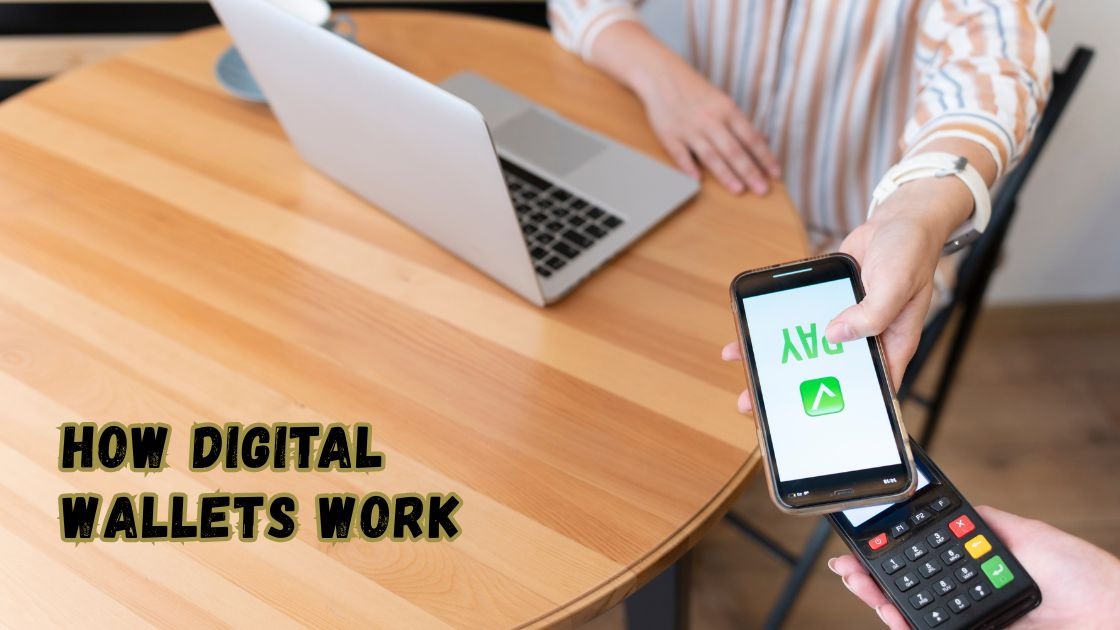
When you tap your phone at a store terminal or click “pay” online, your digital wallet communicates with the point of sale system using Near Field Communication (NFC) technology or QR codes. This is where understanding how digital wallets work gets interesting because your actual financial details are never shared with the merchant.
Step 3: Authentication and Verification
Before the payment goes through, the wallet requires you to verify your identity. This happens through one or more of the following security authentication methods:
- Fingerprint scanning or biometric recognition
- Facial recognition technology like Face ID
- A unique PIN code set by the user
- Device level passcode verification
- Two factor authentication for online purchases
This multi-layered approach is exactly how digital wallets work to prevent unauthorized access and keep your money safe from fraud.
Step 4: Payment Processing and Confirmation
Once authenticated, the token is sent to the payment processor, which contacts your bank or card issuer to verify funds. If everything checks out, the transaction is approved, and you receive an instant confirmation notification. The entire process, from tap to confirmation, typically takes less than two seconds. This speed is a major reason why consumers and businesses alike are rapidly adopting mobile wallet solutions.
Types of Digital Wallets You Should Know
Not all digital wallets serve the same purpose. Knowing the different types helps you understand how digital wallets work across various use cases.
Closed Wallets
These are issued by specific companies and can only be used on their platforms. For example, the Amazon Pay balance can only be spent on Amazon. Refunds from purchases are credited back to the wallet rather than your bank account.
Semi Closed Wallets
Semi closed wallets allow transactions at select partner merchants, both online and offline, but you cannot withdraw cash. Examples include Paytm and PhonePe, which are popular digital payment platforms in many regions.
Open Wallets
Open wallets are issued in partnership with banks and offer the most flexibility. You can make purchases, transfer money, and even withdraw cash from ATMs. These wallets fully demonstrate how digital wallets work as complete financial tools that can replace traditional banking for daily needs.
Key Benefits of Using Digital Wallets
Now that you understand how digital wallets work, it is worth exploring why they have become so popular among consumers and businesses worldwide.
- Speed and convenience allow you to complete transactions in seconds without carrying physical cards or cash
- Enhanced security through tokenization, encryption, and biometric authentication protects your financial data better than traditional cards
- Expense tracking features automatically categorize your spending and provide real-time transaction history
- Reward integration lets you store loyalty cards, earn cashback, and redeem offers all in one place
- Global accessibility enables cross border payments and currency conversions with minimal fees
These advantages make digital wallets a practical choice for anyone looking to simplify their personal finance management.
Challenges and Drawbacks to Consider
Despite the many benefits, there are certain limitations worth noting when learning how digital wallets work in real world conditions. Not every merchant accepts mobile contactless payments, especially in rural areas or developing regions. Device dependency is another concern because a dead battery means no access to your funds. Privacy conscious users may also worry about how companies collect and use their transaction data. Additionally, technical glitches or server outages can temporarily block your ability to make payments, which can be frustrating during critical moments.
How Digital Wallets Work to Protect Your Data
Security remains the number one concern for new users, so understanding how digital wallets work on the encryption side is essential. Every transaction is protected by end to end encryption, meaning your data is scrambled into unreadable code during transmission. Combined with tokenization, even if a hacker intercepts the data, they receive a useless random token instead of your actual card number. Most wallets also comply with PCI DSS standards, adding another layer of regulatory protection. This combination of encryption, tokenization, and biometric verification makes digital wallets significantly safer than swiping a traditional magnetic stripe card.
Choosing the Right Digital Wallet for Your Needs
With so many options available, selecting the right wallet depends on your spending habits, device compatibility, and security preferences. Apple users naturally gravitate toward Apple Pay, while Android users prefer Google Pay. For online shopping and freelance payments, PayPal remains a top choice. Evaluate each wallet based on accepted merchants, transaction fees, and additional features like budget tracking or cryptocurrency support. Understanding how digital wallets work empowers you to make a well informed decision that fits your lifestyle perfectly.
Conclusion
The way we pay for goods and services has evolved dramatically, and digital wallets sit right at the center of this financial revolution. In this article, we explored how digital wallets work by examining everything from secure data storage and tokenization to the instant verification process that completes your transactions within seconds. We also discussed the three main wallet types, their everyday advantages, potential drawbacks, and practical safety tips every user should follow.
What makes these platforms truly remarkable is the combination of encryption technology, biometric security, and real-time payment processing working together seamlessly behind every single tap or click. Your actual card numbers never get shared with merchants, and multiple layers of authentication ensure that only you can authorize payments from your account.
As the world rapidly moves toward a cashless economy, having a solid understanding of how digital wallets work gives you a significant advantage. You become a more informed consumer who can protect personal data, avoid common pitfalls, and fully embrace the convenience that digital payment platforms offer.
Whether you prefer contactless mobile payments at your local store, online fund transfers to family members, or managing all your loyalty rewards in one place, digital wallets deliver unmatched simplicity and security. Now that you clearly understand how digital wallets work, you are fully equipped to make confident, secure, and smarter payment choices every single day. Start exploring the wallet that best fits your lifestyle today.